 50% off on online courses!


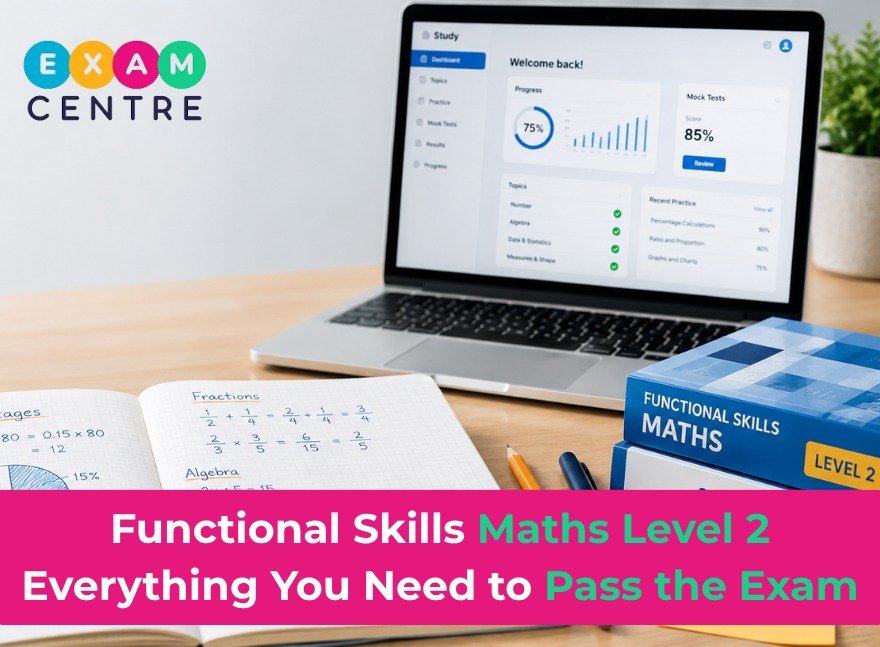
Functional Skills Maths Level 2 is one of the most useful qualifications for learners who need a recognized math certificate for work, apprenticeships, university entry, or personal development. Many students look for the Functional Skills Maths Level 2 qualification because it is a practical and accessible option that is widely recognized by employers and colleges.
If you are planning to take the Functional Skills Maths Level 2 exam, this guide explains what the course includes, how the exam works, how to revise, and how to improve your chances of passing. This guide also covers important topics such as City & Guilds, Functional Skills Maths Level 2, and the main exam options available to learners.
What is Functional Skills Maths Level 2?
Functional Skills Maths Level 2 is a qualification designed to test real-life maths skills. It focuses on practical numeracy rather than only academic theory. That means the exam measures whether you can use maths in everyday situations such as budgeting, measuring, calculating percentages, interpreting charts, and solving problems.
This qualification is often compared to a GCSE grade 4/C+ equivalent, although the exact use depends on the organization requesting it. Many learners choose Level 2 Functional Skills maths because it is shorter and more practical than a traditional GCSE resit.
Who needs Functional Skills Maths Level 2?
Functional Skills Maths Level 2 is designed for learners who need a practical and recognized maths qualification. It is ideal for job seekers, apprentices, adults returning to education, learners who did not pass GCSE Maths, and students who need a maths pass for further study or training. Many people choose this qualification because it is focused on everyday maths skills and can often feel more accessible than the traditional GCSE route.
This qualification is often chosen by a wide range of learners for different reasons:
Job seekers who need to meet employer requirements for maths.
Students who want to get higher education need to meet basic entry requirements for maths.
Apprentices who need a maths qualification as part of their training.
Adults returning to education after a break and needing a fresh start.
Learners who did not pass GCSE Maths and want an alternative route to improve their functional skill maths qualification level.
Students applying for higher courses that require a maths pass as part of the entry criteria.
Many people also choose Functional Skills Maths Level 2 because it focuses on practical maths rather than heavy academic theory. That makes it a good option for learners who want to build confidence, gain a qualification more quickly, or improve their chances of moving forward in education or employment.
If you are searching for Functional Skills Maths Level 2 exams, you are probably looking for a route that is more flexible, accessible, and directly useful in real-life situations. For many learners, this qualification provides exactly that balance between achievement and practicality.
What is in the Functional Skills Maths Level 2?
The Functional Skills Maths Level 2 exam usually includes three main areas:
1. Using numbers and the number system
This section focuses on your ability to work confidently with numbers in everyday situations. It includes things like addition, subtraction, multiplication, division, fractions, decimals, percentages, ratios, and money calculations. You may also need to estimate answers, compare values, or convert between different forms of numbers. This part of the exam checks whether you can handle the numerical tasks people face in real life, such as working out discounts, splitting costs, or calculating totals.
2. Using measures, shape, and space
This part tests how well you understand measurements and geometric ideas. You may be asked to calculate length, weight, volume, time, area, perimeter, or capacity. It can also include questions about shapes, angles, scale, and spatial reasoning. In practical terms, this section reflects situations like measuring materials, reading a timetable, comparing sizes, or working out how much space something will take.
3. Handling information and data
This section looks at how well you can read, understand, and use data presented in different formats. You might need to interpret tables, charts, graphs, or diagrams, then use that information to answer questions or make calculations. For example, you could be asked to compare results, identify patterns, or work out averages. This part is important because data handling is a skill used in many jobs, courses, and everyday decisions.
The exam is designed around real-world tasks. For example, you may be asked to calculate discounts, work out ratios, interpret graphs, or compare measurements. Unlike some traditional maths exams, the focus is less on memorising formulas and more on applying maths in practical situations.
Exam format for Functional Skills Maths Level 2
We offer Functional Skills Maths Level 2 in a computerized format. The exact exam structure can vary depending on the awarding body, but many students take a formal exam at an approved centre.
If you are booking with a specific provider, always confirm the exam board, delivery method, and entry requirements before registering. Different awarding bodies may present the questions in slightly different ways, but they all assess the same core skill areas: numbers, measures, shape and space, and data handling.
How to pass Functional Skills Maths Level 2
If your goal is to pass Functional Skills Maths Level 2, the best approach is to focus on the most common exam topics and practise under timed conditions.
1. Learn the basics first
Make sure you are confident with:
Fractions.
Percentages.
Decimals.
Ratio and proportion.
Measures.
Reading charts and graphs.
2. Practise exam questions
The more questions you do, the more confident you become. Use past papers, sample papers, and topic-based worksheets to build your speed and accuracy.
3. Work on weak areas
If you keep making mistakes in one topic, focus revision time on it. For example, if percentages are a problem, do a short daily practice until it becomes easier.
4. Improve calculator skills
Many learners lose marks because they do not use the calculator efficiently. Learn how to enter calculations properly and check your answers.
5. Manage your time in the exam
Do not spend too long on one question. If a question looks difficult, move on and return to it later if needed.
Why City & Guilds matters
Many learners specifically search for City & Guilds Maths Level 2 because City & Guilds is a well-known awarding body. If your centre offers Functional Skills Maths Level 2 City & Guilds, make sure you understand the registration process, exam style, and results timeline.
The important point is that the underlying maths skills are broadly similar across providers. What matters most is choosing a centre that offers the qualification you need, in the format that suits your study plan, and with enough time to prepare properly.
Functional Skills Maths Level 2 is a practical and valuable qualification for learners who want to improve their opportunities in work, study, or apprenticeships. Whether you are searching for Functional Skills Level 2 Maths, Level 2 Functional Skills Maths City and Guilds, the best way to succeed is to understand the exam, practise regularly, and focus on the topics that appear most often.
With the right preparation, it is absolutely possible to pass Functional Skills Maths Level 2 and gain a qualification that supports your next step.
FAQs
How long does it take to prepare for Functional Skills Maths Level 2?
Functional Skills Maths Level 2 exam Preparation time depends on your current level and confidence with core maths topics. Some learners may feel ready in a few weeks, while others need several months of steady revision. The best approach is to revise consistently, practise one topic at a time, and complete mock papers regularly.
What are the most common mistakes to avoid in the exam?
Functional Skills Maths Level 2 Common mistakes to include are ignoring the exam format, focusing only on easy topics, not practising under timed conditions, losing marks through calculator errors, and misreading the question. In Functional Skills Maths Level 2, it is important to apply the maths correctly, show your working, and answer the question in context.
What is the best way to revise for Functional Skills Maths Level 2?
A strong revision plan should include topic-by-topic revision, mixed practice questions, timed mock tests, error correction, and weekly review. Functional Skills Maths past papers also help to use real-life examples such as shopping discounts, travel times, recipes, bus timetables, and percentage changes because this matches the style of the exam.
What is Functional Skills Maths Level 2?
Functional Skills Maths Level 2 is a practical qualification testing everyday numeracy, problem-solving, and data handling. It covers numbers, measures, shape, space, and data. It is often comparable to GCSE grade 4/C and is ideal for work, apprenticeships, or further study.
Is City & Guilds Functional Skills Maths Level 2 accepted?
Yes, City & Guilds is a recognized awarding body widely accepted by employers and colleges. However, always confirm with the organization requesting the qualification. The core maths skills are similar across providers, so the qualification remains valid for most purposes.

Similar News

0 Comments